
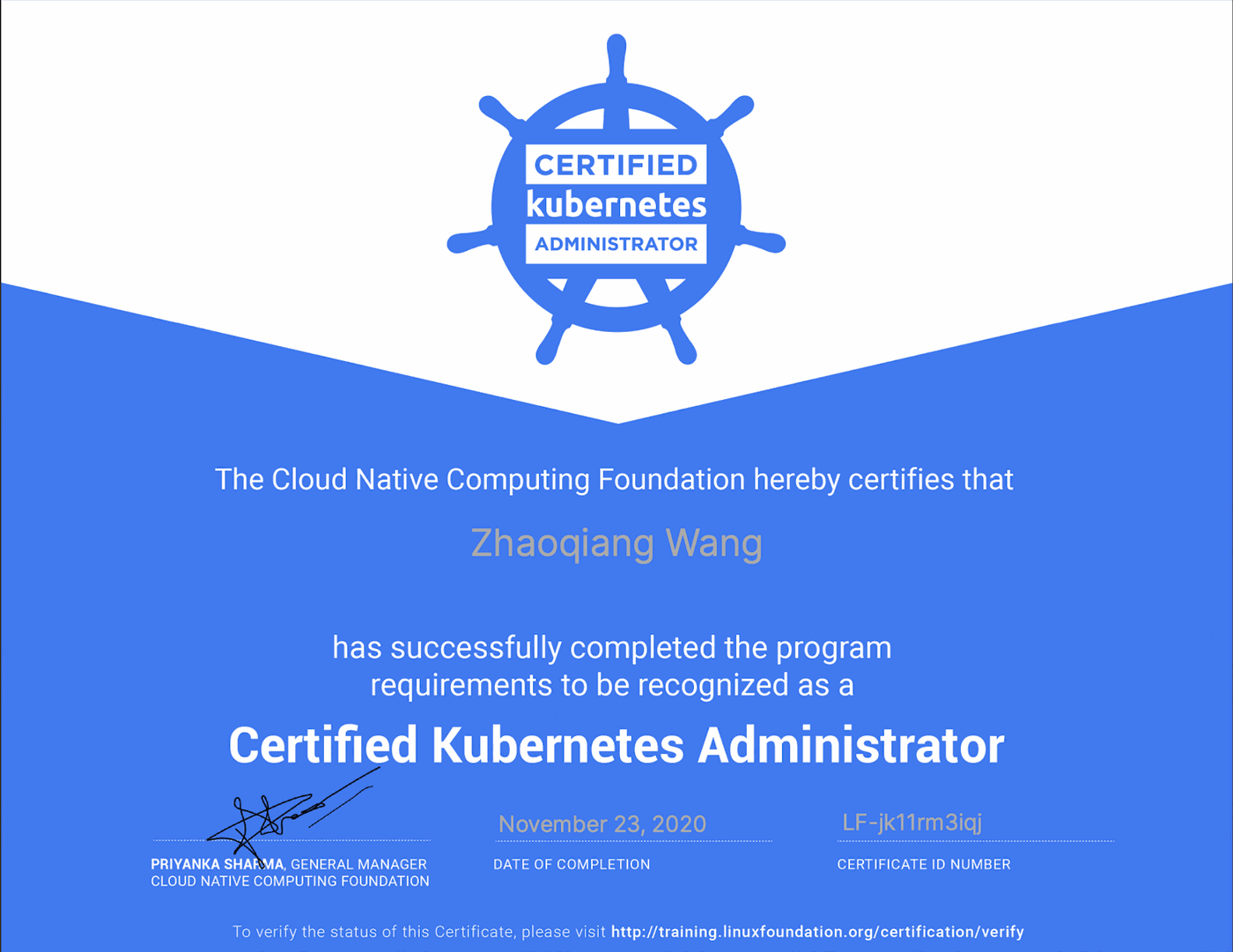
We Passed the CKA Exam
The Certified Kubernetes Administrator (CKA) exam is a hands-on, command-line-based certification that proves Kubernetes skills. Its purpose is to ensure that CKA holders have the skills, knowledge and competence required of Kubernetes administrators.
We will now deliver excellent Kubernetes-based solutions to our clients.
Why Kubernetes, and What It Provides
Containers are a good way to bundle and run applications. In production, you need to manage containers so that there is no downtime — if a container goes down, another one needs to start. Wouldn't it be easier if the system handled that for you?
That's where Kubernetes comes in. Kubernetes provides a framework for running distributed systems resiliently. It takes care of scaling and failover for your application and provides deployment patterns — for example, it makes canary deployments easy to manage.
Kubernetes provides:
- Service discovery and load balancing
Kubernetes can expose a container using a DNS name or its own IP address. If traffic is high, it load-balances and distributes network traffic so the deployment stays stable. - Storage orchestration
Kubernetes can automatically mount the storage system of your choice, such as local storage or public cloud providers. - Automated rollouts and rollbacks
You describe the desired state of your deployed containers, and Kubernetes changes the actual state to the desired state at a controlled rate — for example, creating new containers, removing existing ones and moving their resources. - Automatic bin packing
You tell Kubernetes how much CPU and memory (RAM) each container needs, and it fits containers onto nodes to make the best use of resources. - Self-healing
Kubernetes restarts containers that fail, replaces containers, kills containers that don't respond to your health checks, and doesn't advertise them to clients until they are ready. - Secret and configuration management
Kubernetes stores and manages sensitive information such as passwords, OAuth tokens and SSH keys, and lets you deploy and update secrets and configuration without rebuilding container images.